Height of The Land
2017
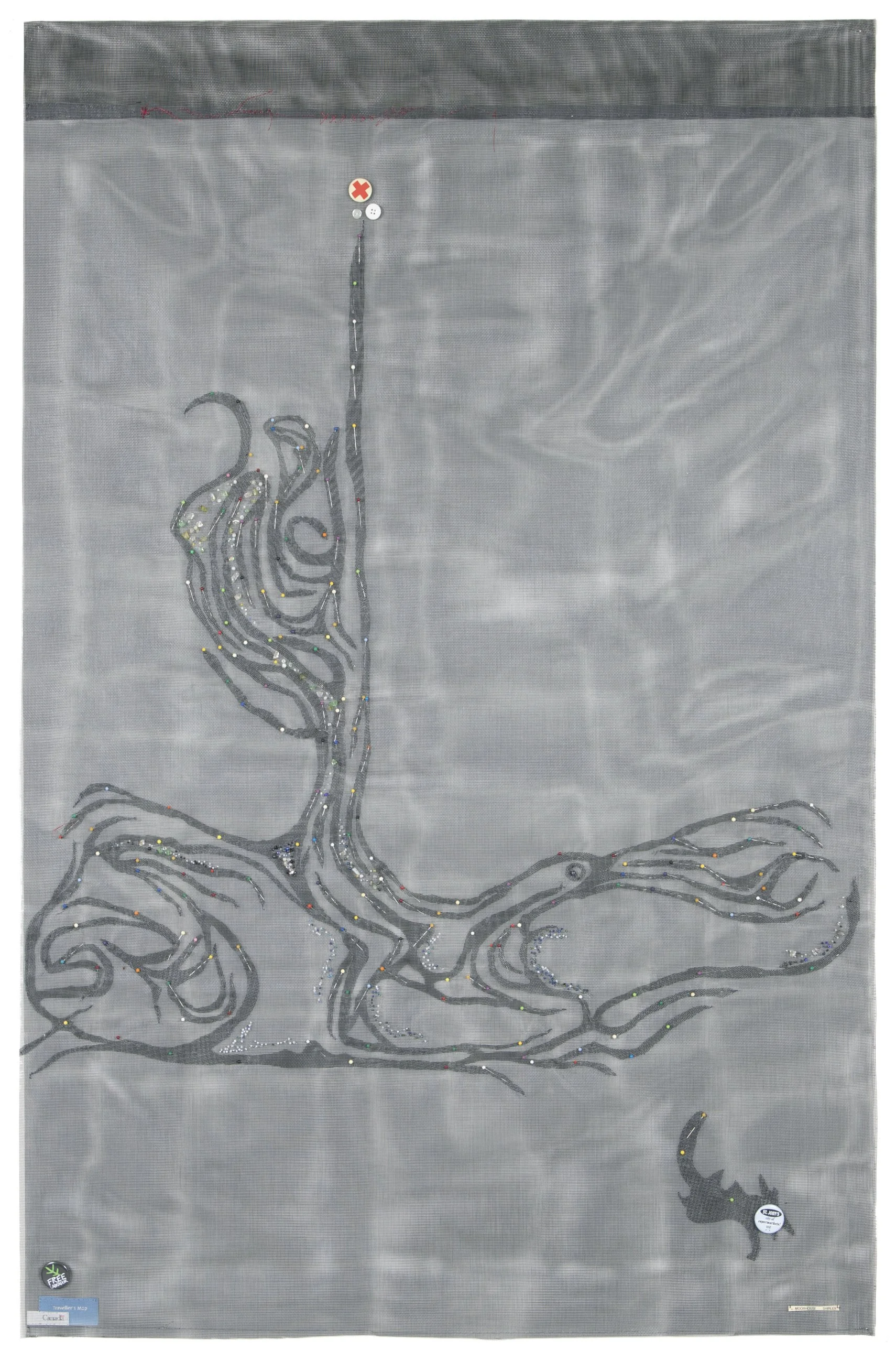
Fly screen, dressmaker’s pins, beads, buttons, found and claimed objects
55.5 x 36 inches
Grey fly screen overlaps black fly screen; both meshes sewn slightly askew, creating an illusory effect of sea or air current movements. Labrador's topography is rendered in another black fly screen. Using scissors, it was cut in one continuous random motion; with seemingly neither beginning nor end.
In 1929, Labrador and Quebec’s provincial boundaries were officially recognized. This boundary dispute was resolved by the flow of water; therefore, the boundary has an organic shape.
From the highest point, or “The Height of The Land,” the lands over which the waters flowed Eastward towards the Atlantic Ocean became Labrador. The lands over which the waters flowed Westward to Ungava Bay and Hudson Bay were granted to Quebec.
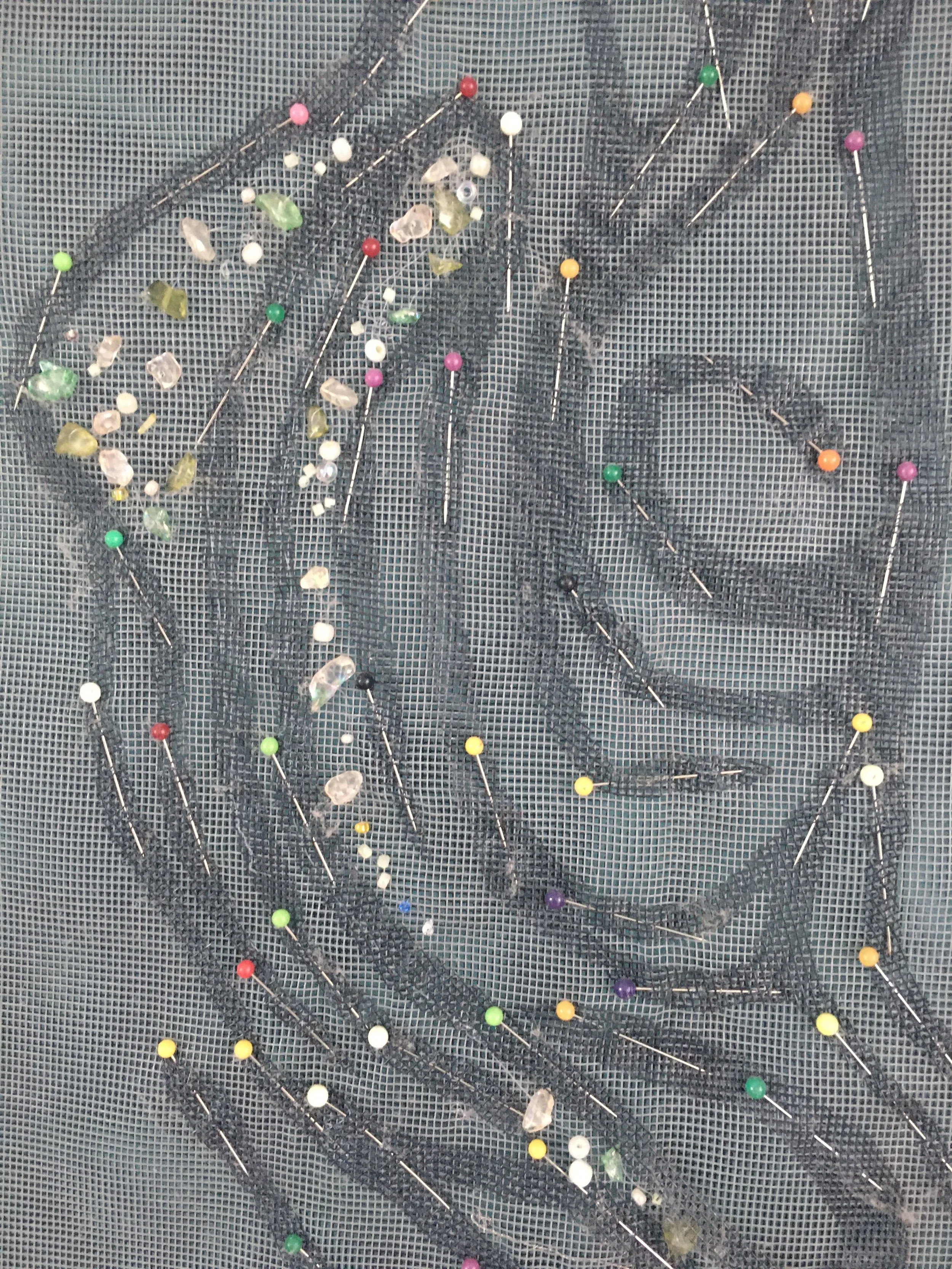
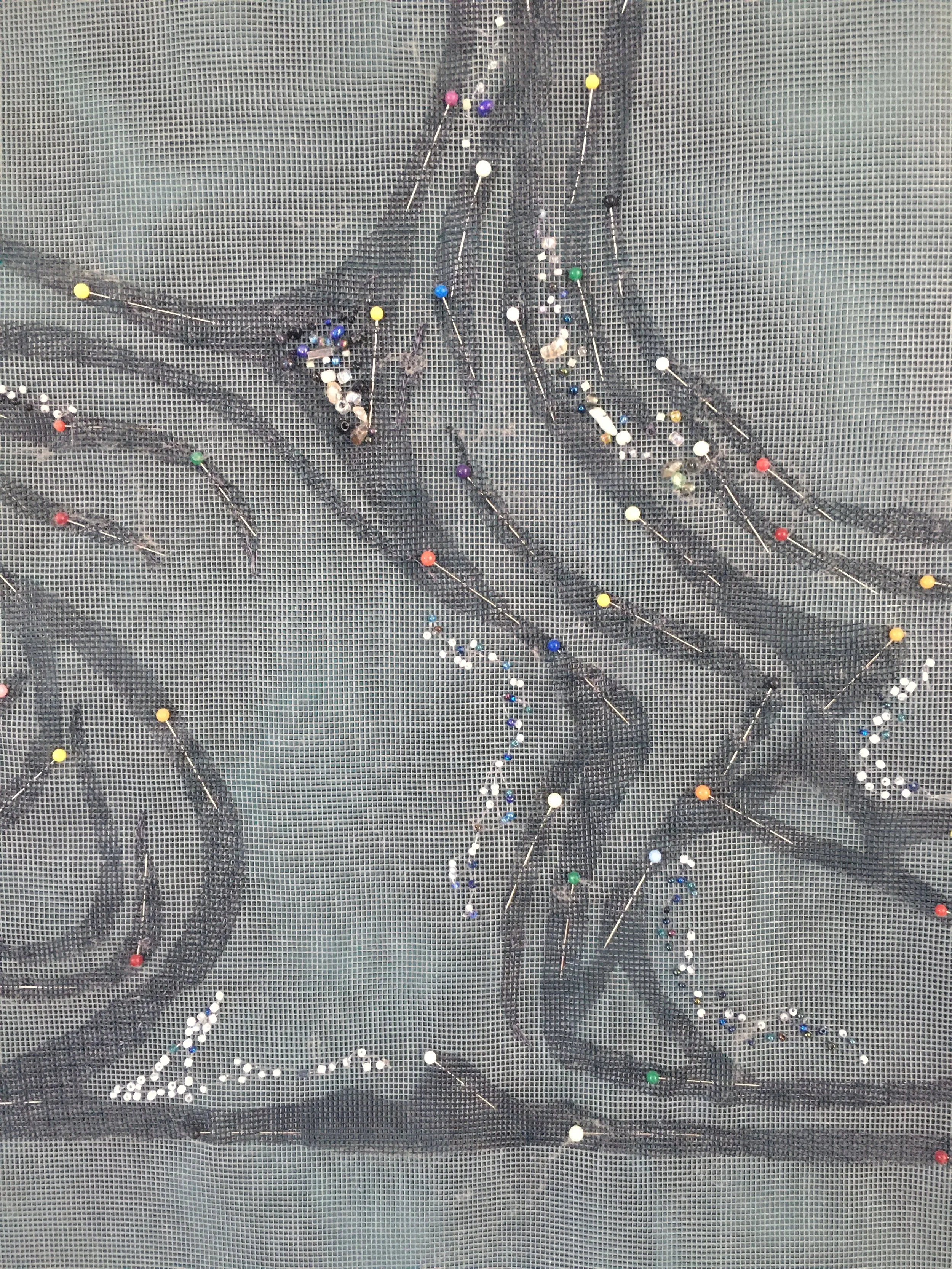
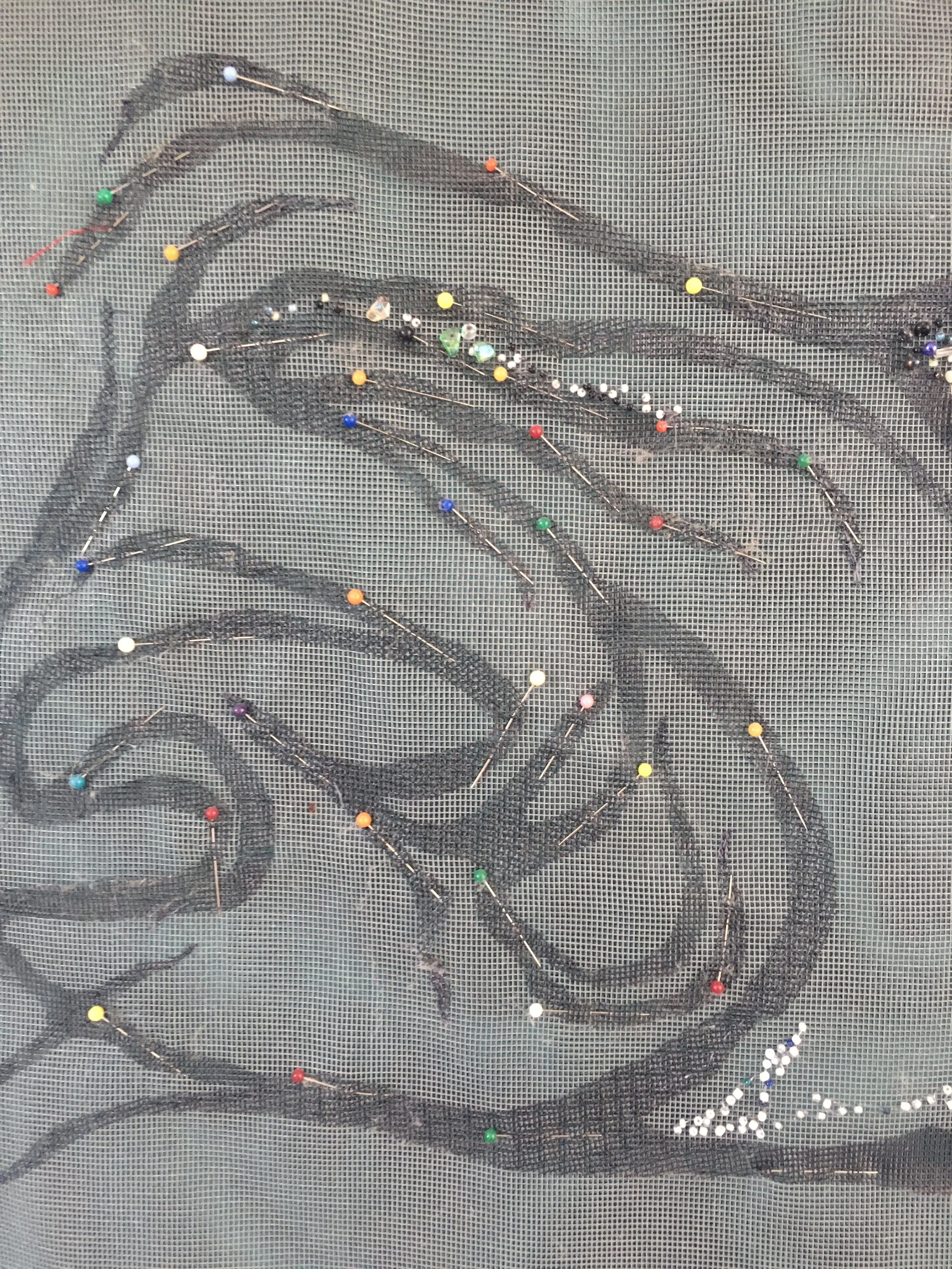
The multi-coloured pin heads signify the surveyors’ spikes and markings that cover Labrador. Their glinting needles are “points-of contention,” representing the arguments over the development or conservation of Labrador’s natural resources.
The beads represent the vibrant life water tumbling from The Height of The Land and slowing as it pools at multiple dams and turbines. Eventually, depleted and exhausted, the water creeps into Lake Melville, rests, and sighs into the Atlantic Ocean.
< previous work / next work >